
Why Vitamin C Serum Is a Powerful Addition to Your Routine
A well-planned skincare routine is not necessarily about using a large number of products. The goal is to choose ingredients that complement your skin’s needs and use them consistently. One ingredient that has become a popular part of modern skincare routines is vitamin C. A vitamin C serum can be an especially useful option for people looking to support a brighter, more even-looking complexion while adding antioxidant care to their routine.
Vitamin C is an antioxidant that helps protect skin from oxidative stress caused by environmental factors. When formulated and stored correctly, a serum can deliver vitamin C in a concentrated format that fits easily into a daily skincare routine.
What Makes Vitamin C Serum So Popular?
Vitamin C has earned a place in many skincare routines because of its multiple cosmetic benefits. It is commonly used to improve the appearance of dullness, uneven tone, and the look of post-blemish marks.
Unlike a basic moisturizer, a serum is generally designed to deliver targeted ingredients in a lightweight formulation. This makes a vitamin C serum easy to layer with other everyday skincare products.
However, not every vitamin C serum is formulated in the same way. The type of vitamin C, concentration, supporting ingredients, packaging, and stability can all affect how the product performs.
Antioxidant Support for Your Skin
One of the main reasons vitamin C is included in skincare is its antioxidant properties. Daily exposure to environmental stressors can contribute to oxidative stress, which may affect the appearance of skin over time.
Topical vitamin C provides antioxidant support as part of a broader skincare routine. It does not replace sunscreen, but it can complement sun-protection habits when used appropriately.
For a simple daytime routine, you might cleanse your skin, apply a vitamin C serum, follow with moisturizer if needed, and finish with broad-spectrum sunscreen.
Vitamin C Can Support a Brighter Looking Complexion
Dull-looking skin can develop for many reasons, including environmental exposure, dehydration, and the natural process of skin turnover. Vitamin C is frequently chosen by people who want their complexion to look more radiant.
With consistent use, a well-formulated serum may help improve the appearance of uneven tone and contribute to a fresher-looking complexion. Results are rarely instant, though. Skincare ingredients generally require regular use and patience.
This is one reason it is better to evaluate a product over time rather than expecting dramatic changes after a few applications.
Choosing the Right Vitamin C Serum
When shopping for a vitamin C serum, the ingredient list is more important than attractive packaging or bold marketing claims.
Vitamin C can appear in several forms. L-ascorbic acid is one of the most studied forms, while derivatives such as 3-O-ethyl ascorbic acid are also used in skincare formulations. Different forms can vary in stability, formulation requirements, and how they feel on the skin.
You should also consider supporting ingredients. Hydrating ingredients such as glycerin or panthenol can help create a more comfortable formula, while ingredients such as niacinamide are commonly used alongside vitamin C for broader skincare benefits.
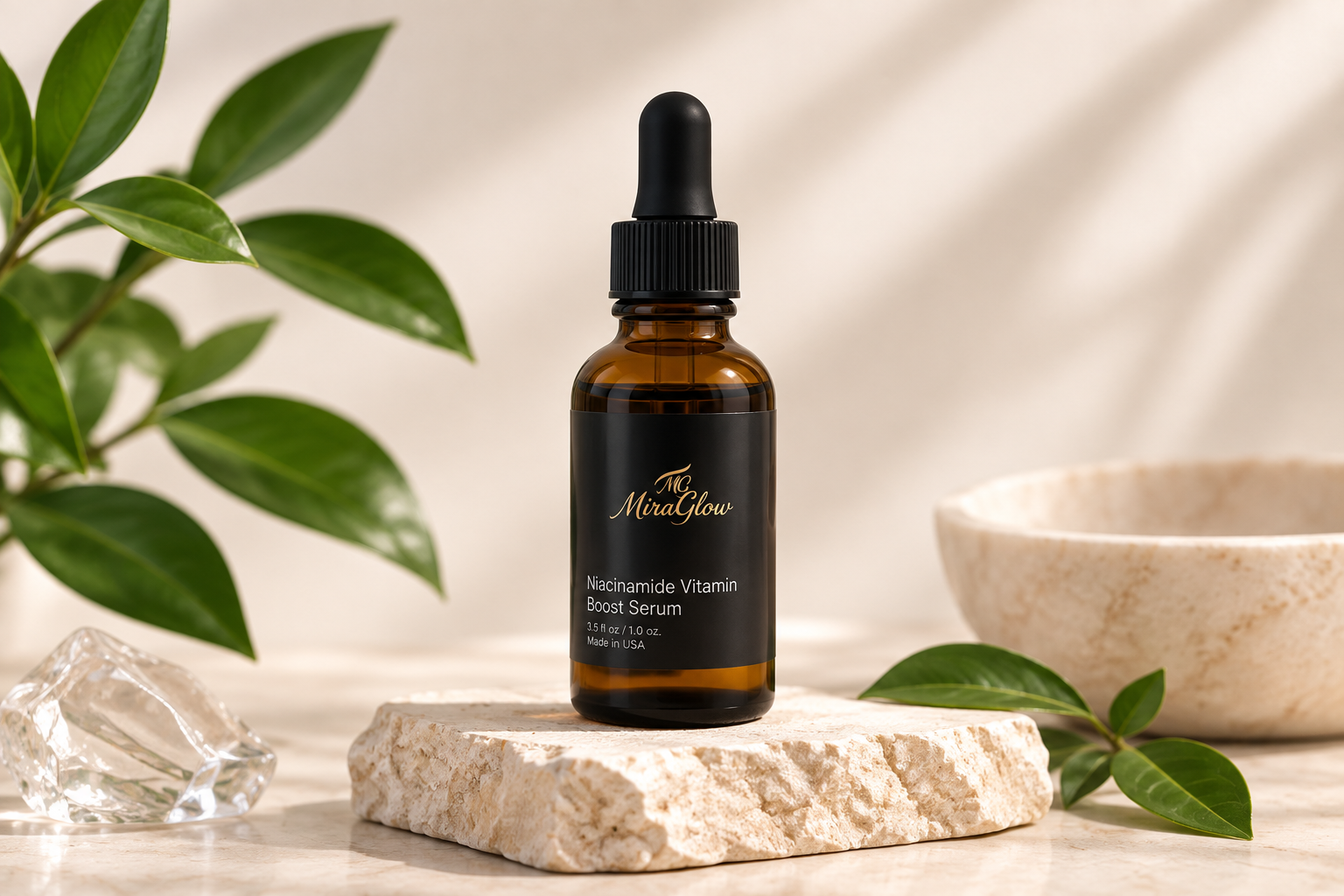
For example, the MiraGlow Brightening Face Serum with Niacinamide and Vitamin C combines vitamin C with niacinamide, panthenol, and glycerin. The product uses 3-O-ethyl ascorbic acid as its vitamin C ingredient and is designed to layer with moisturizer and SPF.
Pay Attention to Packaging and Storage
Vitamin C can be sensitive to environmental conditions, depending on the form used in a product. Light, heat, air, and moisture can affect the stability of some vitamin C formulations.
That makes packaging an important consideration when comparing products. Follow the manufacturer's storage instructions and avoid leaving your serum exposed to excessive heat or direct sunlight.
Changes in color, texture, or smell can sometimes indicate that a product has changed over time. When in doubt, check the product instructions and expiration or period-after-opening information.
How to Add Vitamin C Serum to Your Routine
Introducing a vitamin C serum does not need to make your routine complicated.
In the morning, start with a gentle cleanser. Apply a few drops of serum according to the product instructions and allow it to absorb. Follow with moisturizer if your skin needs additional hydration, then apply sunscreen.
If you have sensitive skin or are new to active skincare ingredients, start gradually. Applying a small amount and monitoring how your skin responds can help you decide whether the product is comfortable for regular use.
Avoid adding several new active ingredients at the same time. If irritation develops, simplify your routine and introduce products individually once your skin feels comfortable again.
Can Vitamin C Be Used With Other Skincare Ingredients?
Vitamin C can be incorporated into many different skincare routines, but compatibility depends on the specific products and your skin's tolerance.
For example, vitamin C and sunscreen can work well together in a morning routine. Hydrating ingredients can also complement vitamin C, particularly if your skin tends to feel dry.
If you use stronger actives such as retinoids or exfoliating acids, pay attention to how your skin responds when combining products. More active ingredients do not necessarily mean better results. A balanced routine is often easier to maintain.
Common Mistakes to Avoid
One common mistake is choosing a product solely because it has a high percentage of vitamin C. Higher concentration does not automatically mean a product will be more effective or more suitable for your skin.
Another mistake is using too many active products simultaneously. This can make it difficult to determine which product is responsible if irritation occurs.
Finally, consistency matters. Applying a serum occasionally and expecting significant changes may lead to disappointment. Follow the product's directions and give your skincare routine enough time to show gradual results.
Frequently Asked Questions
Is vitamin C serum good for daily use?
Many vitamin C serums are designed for daily use, but the recommended frequency depends on the specific formulation and your skin's tolerance. Follow the product instructions and introduce it gradually if you are new to vitamin C.
Can I use vitamin C serum in the morning?
Yes. Many people prefer using vitamin C in their morning routine because of its antioxidant properties. It should be followed by sunscreen during the daytime.
Does vitamin C serum help with dark spots?
Vitamin C is commonly used to improve the appearance of uneven skin tone and dark spots. Results vary between individuals and depend on factors such as formulation, consistency, and the cause of pigmentation.
Can sensitive skin use vitamin C serum?
Some people with sensitive skin can use vitamin C comfortably, particularly when using a suitable formulation and introducing it gradually. If your skin is highly reactive, patch testing and professional skincare advice may be helpful.
How long does vitamin C serum take to work?
Skincare results vary. Some people may notice improved skin feel or radiance relatively quickly, while visible changes in tone generally require consistent use over several weeks.
Should I use sunscreen with vitamin C serum?
Yes. Vitamin C does not replace sunscreen. A broad-spectrum sunscreen should remain an important part of a daytime skincare routine, especially when your goal is to maintain an even-looking complexion.
Final Thoughts
A vitamin C serum can be a valuable addition to a straightforward skincare routine when you choose a suitable formulation and use it consistently. Its antioxidant properties and popularity for supporting brighter, more even-looking skin make it an ingredient worth considering.
The key is not to chase the strongest formula or the most impressive marketing claim. Instead, look at the vitamin C form, supporting ingredients, packaging, product instructions, and how your skin responds. A simple routine built around cleansing, targeted skincare, moisturizing, and daily sun protection can be much easier to maintain over time.









0 Comments